
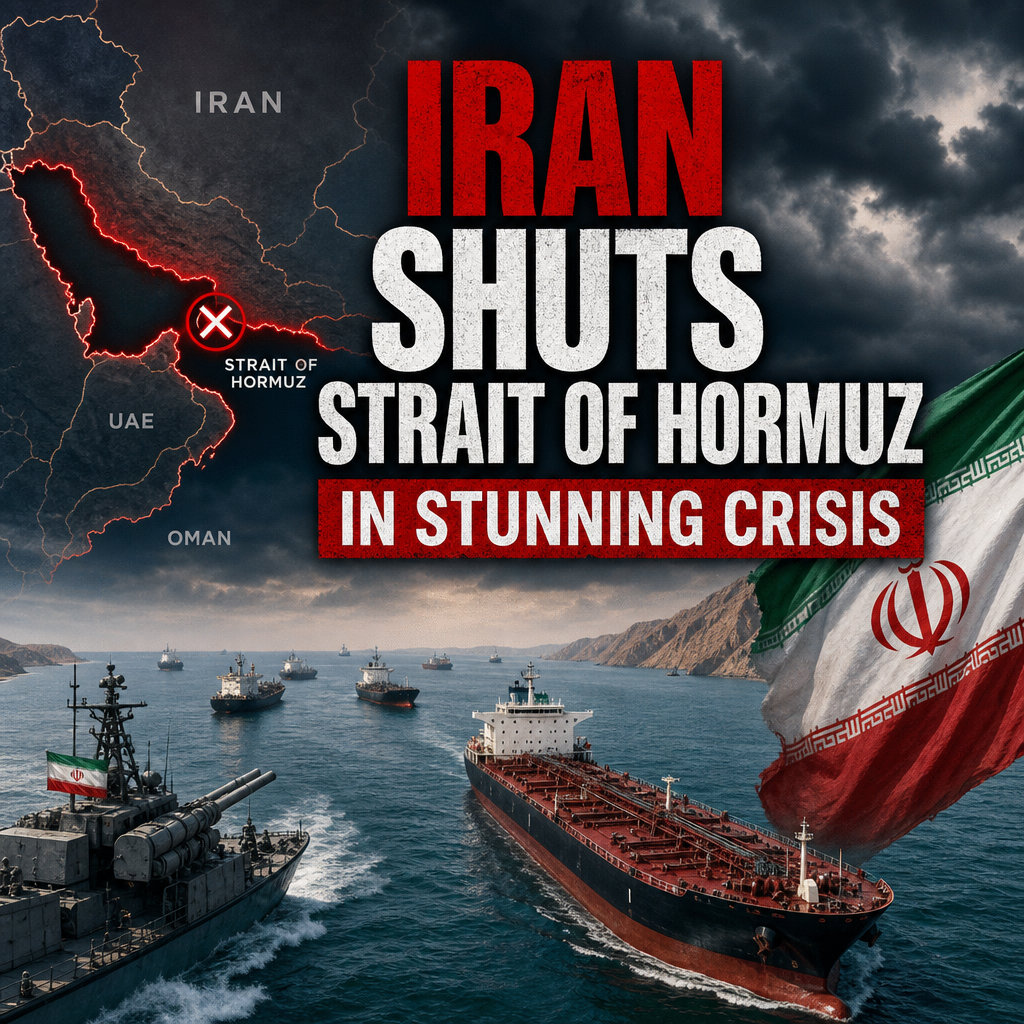
Iran Shuts Strait of Hormuz in Stunning Crisis


Iran shuts Strait of Hormuz, and the world is suddenly facing one of the most dangerous moments in a region already stretched by war, sanctions, and mistrust. The move matters far beyond the Gulf: the waterway is a narrow but vital route for global energy shipments, and even a temporary disruption can send shockwaves through oil markets, shipping insurance, and diplomatic efforts aimed at preventing a wider conflict.
Why the Strait of Hormuz matters so much
The Strait of Hormuz is not just another maritime chokepoint. Roughly one-fifth of the world’s oil supply passes through it, along with a major share of liquefied natural gas exports from the Gulf. That means any threat to traffic there quickly becomes a global problem, not merely a regional one.



What makes this latest crisis especially alarming is the combination of military tension and economic vulnerability. Reports circulating across international coverage suggest the shutdown came as the broader confrontation between Iran and Israel intensified, with missile strikes, retaliatory threats, and military signaling raising fears of escalation. Al Jazeera’s framing has emphasized the regional fallout and the possibility of a wider Middle East conflict, while Sky News has focused more on the impact for energy security and the risk to civilian shipping. RT’s coverage, by contrast, tends to highlight the geopolitical blame game and the role of Western pressure in driving Iran’s response.
Those different angles matter, because they show how the same event can be interpreted in sharply different ways. To some, the closure is a dangerous act of coercion. To others, it is a strategic warning from a state that sees itself under existential pressure. Either way, the practical result is the same: uncertainty.




The immediate consequences for markets and shipping
The first place the shock is felt is usually in energy trading. Oil prices often jump within hours of any serious threat to the strait, even before a single tanker is directly hit. That’s because the market prices not only actual disruption, but also the risk that disruption could spread.
Shipping companies face a similar calculation. Even if the waterway is not fully blocked for long, insurers may raise premiums, reroute vessels, or demand extra security measures. That can slow deliveries and add costs throughout supply chains. In a global economy already sensitive to inflation, that kind of pressure can quickly reach consumers.
The likely ripple effects include:
– higher crude oil and fuel prices
– increased shipping insurance costs
– possible delays in LNG exports
– turbulence in stock markets tied to energy and transport
– added pressure on governments to respond diplomatically or militarily
There is also a political effect that is harder to measure but just as important: once a vital trade route becomes part of a military standoff, every move by outside powers becomes more dangerous. A naval escort, a warning statement, or a misread radar contact can escalate tensions faster than diplomats can de-escalate them.
Iran shuts Strait of Hormuz: strategy, pressure, and risk
Seen from Tehran’s perspective, shutting or threatening the strait is a powerful lever. Iran has long understood that it cannot match the combined military power of the United States and its allies in a conventional war, but it can create leverage through geography. The Strait of Hormuz is one of the few places where Iran can impose immediate costs on the international system.
That does not mean the decision is cost-free. In fact, it is likely to draw international condemnation and could provoke a stronger response from regional navies or global powers. It may also harden attitudes among countries that might otherwise prefer negotiation over confrontation.
Different readings of the crisis
The challenge in interpreting this crisis is that the sources do not tell exactly the same story, and that is part of the point. Al Jazeera’s reporting tends to place the episode in the context of wider regional instability, especially the consequences of Israeli strikes and the risk of a broader war involving Lebanon, Gaza, or Iran itself. Sky News, meanwhile, often frames the issue through the lens of global impact: energy prices, shipping security, and the possibility that the conflict could hit households far from the Middle East. RT’s perspective is more likely to question whether Western and Israeli actions have pushed Iran into a corner, suggesting the shutdown should be read as a response rather than an isolated provocation.
There is some truth in all three frames. Iran is clearly using the strait as a pressure point. At the same time, it is operating in a security environment shaped by years of sanctions, proxy conflict, military strikes, and failed diplomacy. And while markets focus on barrels and cargoes, the people most directly affected may be sailors, coastal communities, and civilians living under the threat of retaliation.
What happens next is still unclear
The honest answer is that no one can say with confidence how long such a shutdown would last or whether it would be enforced completely. Past crises in the Gulf have shown that threats, partial disruptions, and temporary closures can be just as damaging as a formal blockade. Much depends on whether regional powers choose restraint or escalation.
Several outcomes are possible:
1. A brief, symbolic closure intended to send a message and then reverse course.
2. A prolonged disruption that keeps markets volatile and raises the risk of military confrontation.
3. Emergency diplomacy involving Gulf states, the United States, European powers, and possibly back-channel mediators.
4. Limited naval confrontation if shipping tries to pass through under protection.
The most likely near-term effect is not total global paralysis, but a fast-moving crisis of confidence. That alone is enough to move markets, unsettle governments, and increase the chance of miscalculation.
The broader lesson is uncomfortable but clear: the Strait of Hormuz remains one of the world’s most fragile pressure points. When tension rises there, the consequences are never local for long. Even if the shutdown proves temporary, the signal it sends is serious — that the regional conflict has crossed into a zone where economics, security, and diplomacy are now tightly, and dangerously, connected.

























